


Your Dog's Strengths and Weaknesses – SWOT Analysis and SMART Goals
Strengths and Weaknesses of Your Dog – SWOT Analysis and SMART Goals
Trainings-Materialien & Workbooks
Basic Obedience: Day 04 of 56
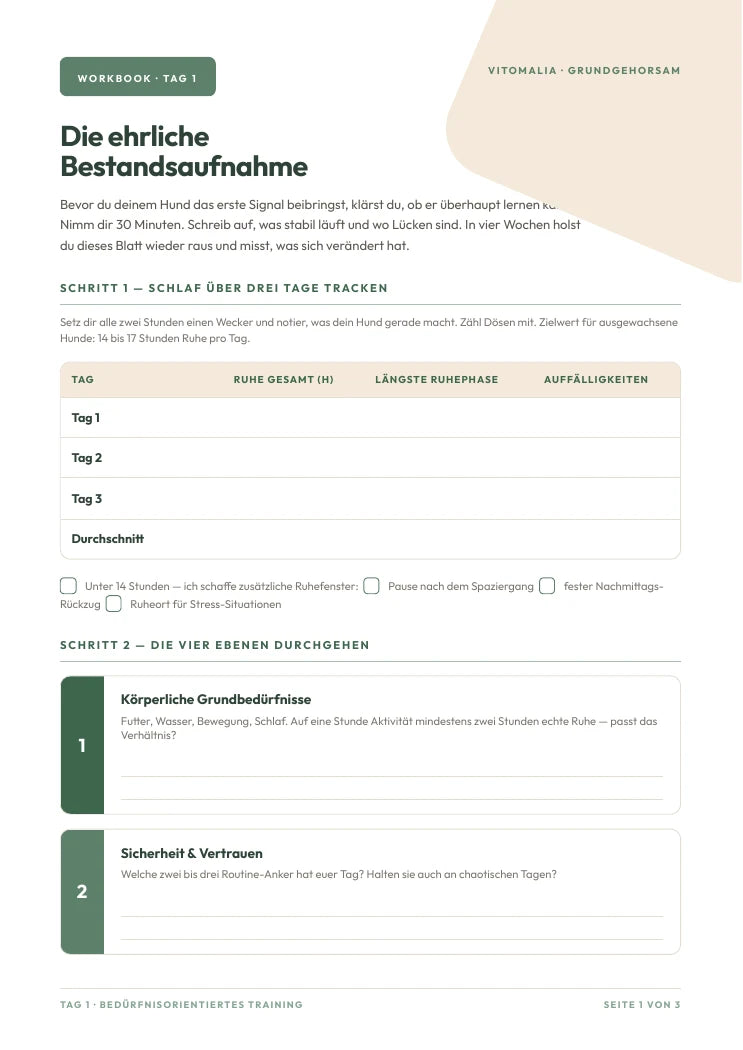
This video and training is part of the Basic Obedience Concept, a structured program designed to promote obedience and the bond between human and dog. The concept is carefully constructed didactically and methodically to ensure that each exercise builds on the previous one, thus achieving maximum effectiveness. It is crucial that you carry out the training in the prescribed order to achieve the best possible results for your dog.
Wondering how to get the most out of training with your dog? No problem, we know the feeling. That's exactly where we come in: With the SWOT analysis and the SMART method, we provide you with two tools to help you better understand your dog and clearly define your training goals. Whether your dog is highly motivated or more of a lone wolf – with these techniques you can foster their strengths and work on their weaknesses. In this blog, you'll learn how to easily apply these methods to your training. Are you ready? Let's get started!
Goal: Lorem ipsum semper habeo duo, ut vis. Aliquyam eu splendide. Ut mei eteu nec antiopam corpora. Kasd pretium cetero qui
Equipment: Lorem ipsum semper habeo duo, ut vis. Aliquyam eu splendide.
Location: Home
Duration: 5 Min.
SWOT Analysis for Dogs: What it is and why it's important?
SWOT analysis is originally a business term, but it is increasingly being applied in other areas – including dog training! SWOT stands for:
- Strengths,
- Weaknesses,
- Opportunities, and
- Threats.
It is a consideration of the status quo, i.e., the current state of your dog. With this method, you can get an overview of your dog's strengths and weaknesses and, based on this, derive opportunities and risks for training.
The SWOT analysis is about a balance of different energies: weaknesses and risks are opposed to strengths and opportunities. Since a SWOT analysis is static and only describes the current state at a certain point in time, it makes sense to perform such a SWOT analysis at the beginning and end of the course, and also in between. To obtain as complete an overall picture as possible, it can be helpful to involve another person in this analysis. Other perspectives are often very helpful.
Internal Factors: Strengths and Weaknesses
What special skills does your dog have, and which ones need work?
Analyzing internal factors means looking at your dog's specific traits. What strengths does he bring that you can build on, and what weaknesses should you keep in mind? Every dog is an individual – some dogs enjoy working with people, while others are more independent due to their personality or breed history.
Also consider personality traits such as patience, energy level, or frustration tolerance. A dog with high frustration tolerance, for example, can learn new tricks particularly well because he doesn't give up quickly, while a dog that frustrates easily needs shorter and more positive training sessions.
External Factors: Opportunities and Threats
While internal factors help you better understand your dog's individual characteristics, external factors analyze how your environment or external circumstances can influence training.
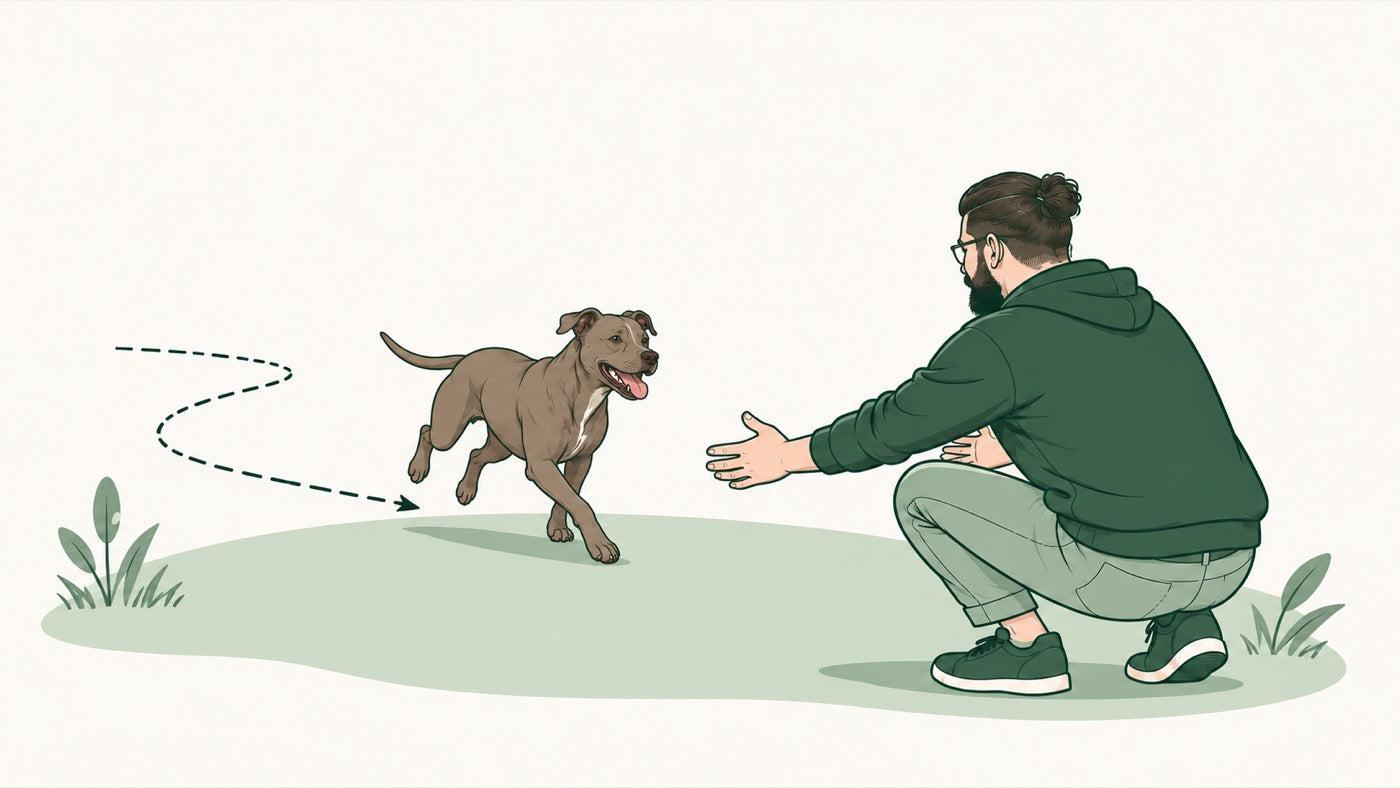
Opportunities usually arise from your dog's strengths. If your dog gets along well with other dogs, you can specifically use social training situations to solidify new behaviors. Your environment also plays a role: For example, if you have access to quiet training areas or group classes, this can be a great way to give your dog new impulses.
Risks, on the other hand, often arise from your dog's weaknesses or external influences. For example: If your dog has a short attention span, this can make training difficult, especially in stressful situations like busy places. However, by recognizing the risk beforehand, you can develop solutions – such as shorter training sessions in less distracting locations.
You'll find the perfect equipment with us
Setting Goals with the SMART Method
After conducting the SWOT analysis for your dog, the next step is to define concrete goals for the training. This is where the SMART method comes in. It helps you set clear and realistic goals that are achievable for both you and your dog.
S: Specific
A goal should always be clearly and specifically formulated. Instead of just saying: "My dog should obey better," you should define exactly what that means. An example could be: "My dog should react to the command word 'sit' within 3 seconds." The more precisely you describe your goal, the better you can implement it in training.
M: Measurable
It is important that you can measure your progress in training. This way, you can see if your training is bearing fruit. Numbers and facts help you with this. For example: "My dog should react to the command word 'sit' 5 times in a row within 3 seconds."
A: Attainable
An attractive goal motivates you to keep going. It must have a clear benefit for you and your dog. If you know that achieving this goal will improve your daily life or make living together easier, the goal is more attractive. And don't forget: the goal should also be attractive for your dog! Positive reinforcement in training is the key to success.
R: Realistic
Here, the aim is to set goals that are truly achievable for your dog. Not every dog learns at the same pace, and that's okay. Set small, realistic goals that build on your dog's abilities. Example: "My dog should safely perform the command word 'down' within one week." If you see progress after a week, you can adjust the goal and expand on it.
T: Time-bound
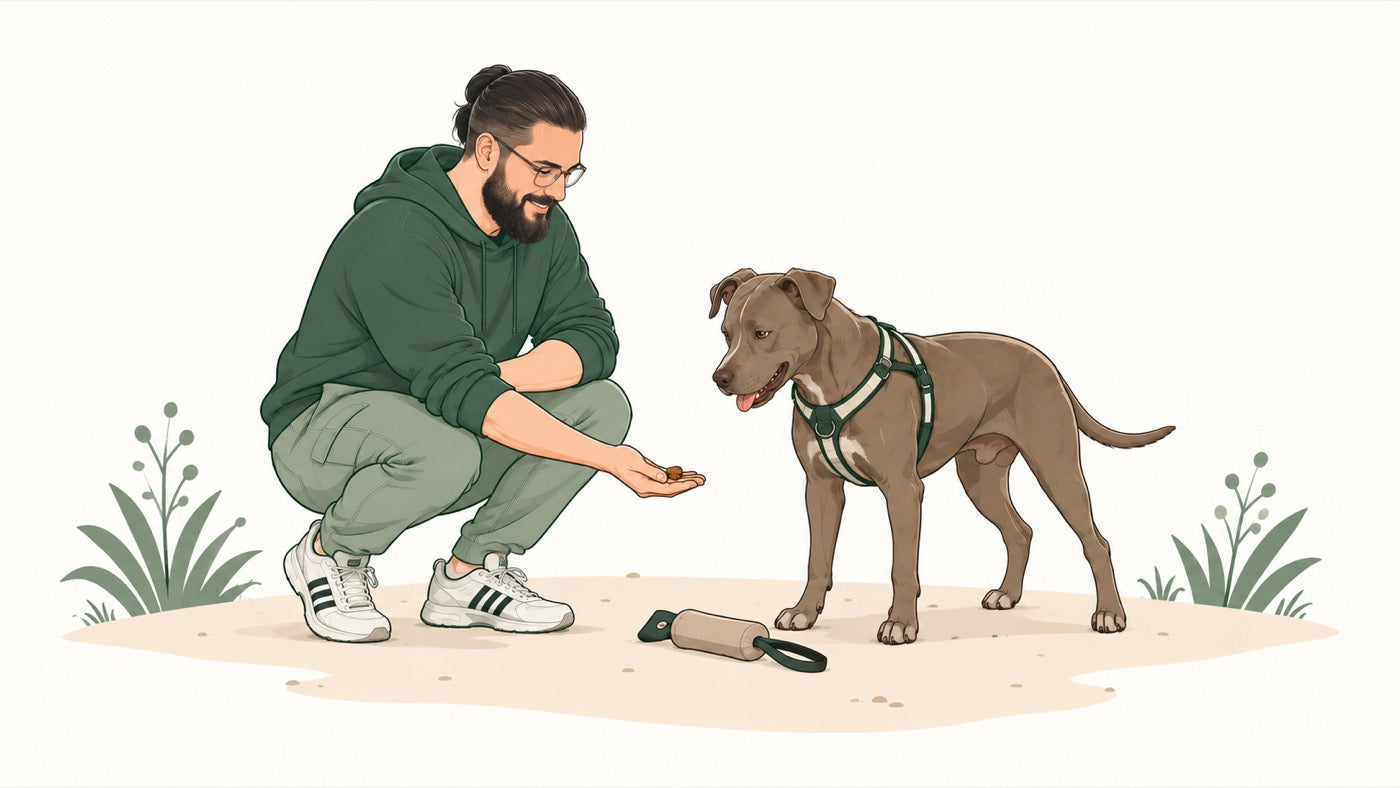
A clear timeframe helps you structure your training. Instead of training indefinitely, you set fixed periods. This prevents your dog from being overwhelmed and allows you to better integrate your training into your daily routine. An example: "I will work on the command word 'sit' for 10 minutes a day and practice it in different situations."
SWOT Analysis and SMART Method in Practice
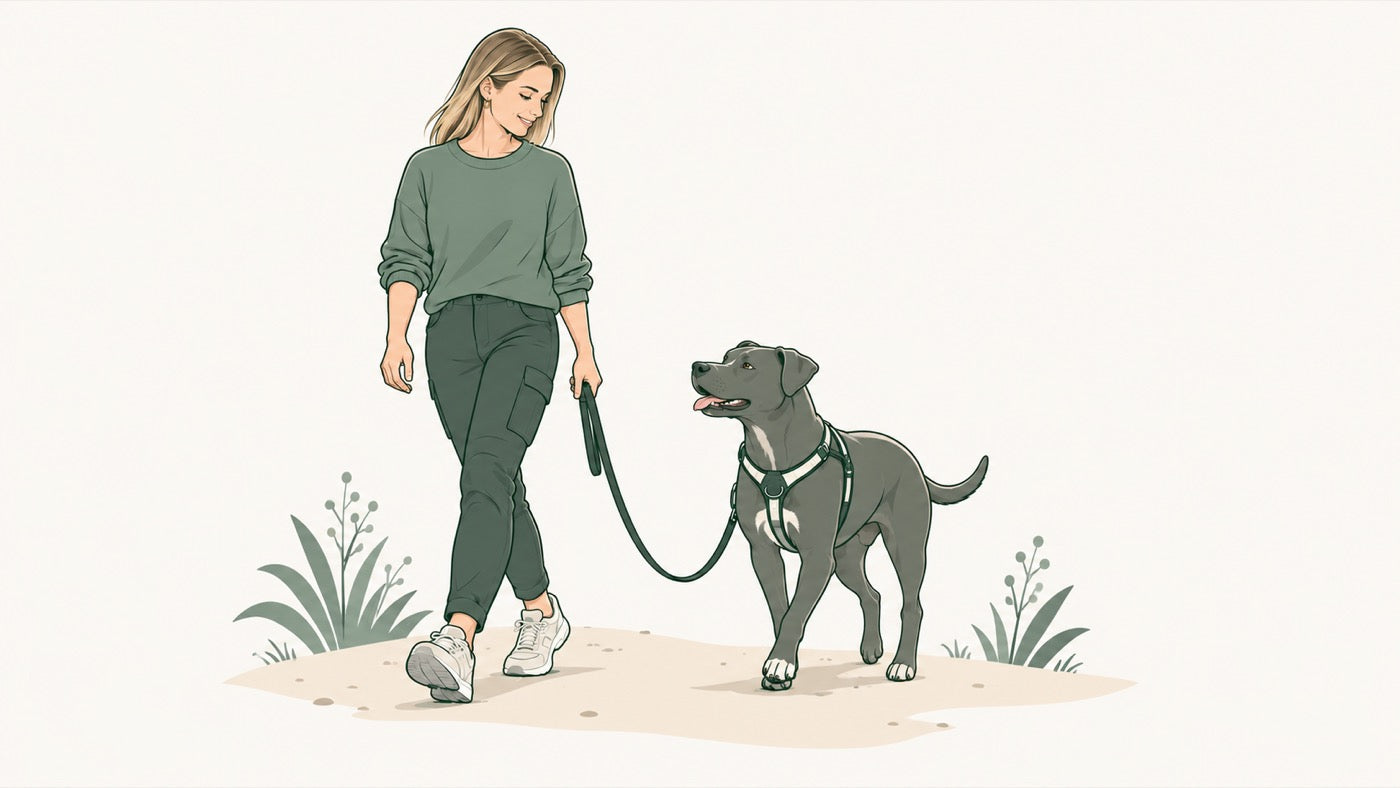
Let's put the theory into practice. Imagine your dog is very social but has trouble concentrating in exciting environments. In a SWOT analysis, social competence would be a clear strength, while a short attention span would be a weakness. An opportunity could be to use your dog's social skills to reinforce new behaviors in group training environments. The risk is that he may have difficulty concentrating in an overly exciting environment.
Your goal could be: "My dog should respond to the command word 'sit' within 5 seconds in a quiet park, even when other dogs are nearby." Here you use the SMART method: you make the goal specific, measurable, attractive, realistic, and time-bound to one week.
With each small step, you make progress – and the best part: your dog will love it because you are working as a team!
Summary
The SWOT analysis and the SMART method offer you, as a dog owner, two effective tools to structure your dog's training in a targeted way. Through the SWOT analysis, you not only recognize your dog's strengths and weaknesses but can also better assess the opportunities and risks that you may encounter in everyday life or training. The SMART method then helps you translate these insights into concrete, measurable, and achievable goals.
It is important that you consider your dog's individual abilities and set realistic expectations for the training. Every dog is different, and what works quickly for one may take a little longer for another – and that is perfectly fine. By setting clear goals and regularly reviewing your progress, you will see how your training continuously improves.
Always remember: good training is based on patience, trust, and a positive approach. When you know where you stand and where you want to go, you can offer your dog the security and clarity he needs to develop. So, set your goals, stay consistent, and enjoy the progress you make together – step by step.
This video and training is part of the Basic Obedience Concept, a structured program to promote obedience and the bond between human and dog. The concept is carefully designed didactically and methodically to ensure that each exercise builds on the previous one, thus achieving maximum effectiveness. It is crucial that you carry out the training in the prescribed order to achieve the best possible results for your dog.