
Audible and Visual Cues – How to Give Your Dog Clear Cues
Auditory and Visual Cues – How to Give Your Dog Clear Signals
Trainings-Materialien & Workbooks
Basic Obedience: Day 05 of 56
This video and training is part of the Basic Obedience Concept, a structured program designed to promote obedience and the bond between human and dog. The concept is carefully constructed didactically and methodically to ensure that each exercise builds on the previous one, thus achieving maximum effectiveness. It is crucial that you carry out the training in the prescribed order to achieve the best possible results for your dog.
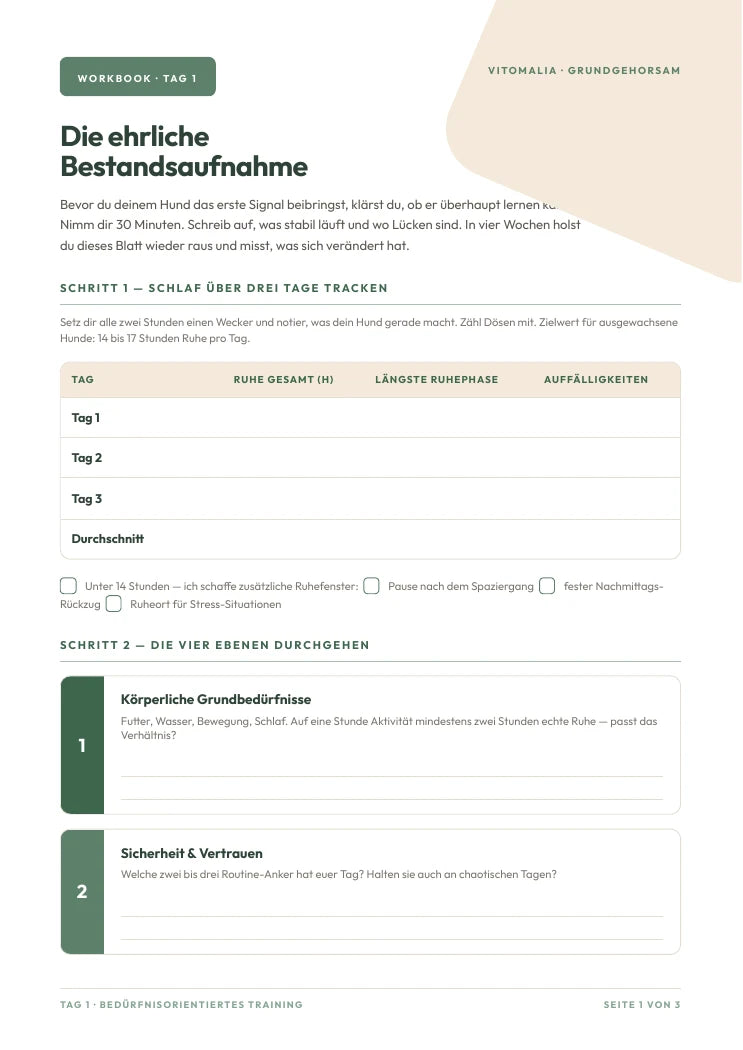
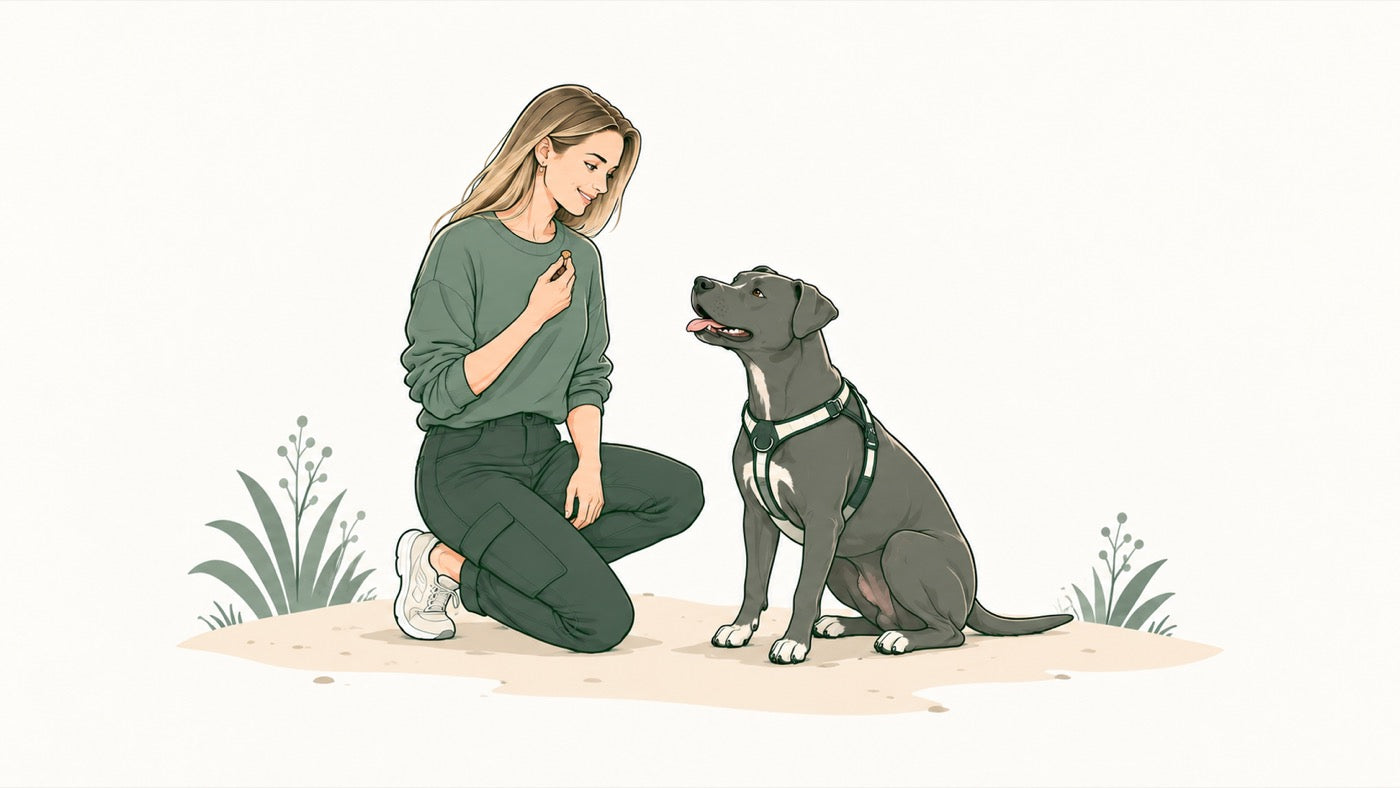
Have you ever wondered why your dog seems to respond to your hand signal but ignores the spoken word? Don't worry, that's completely normal! Dogs perceive the world around them very differently from us. They pay particular attention to our body language and often react more quickly to visual cues than to auditory ones. That's why clear, unambiguous signals are so important in dog training. In this blog, you'll learn why signals are essential for you and your dog, how to use them correctly, and what role the learning environment plays. Of course, we'll also give you helpful tips on how to optimally adapt the training to your dog's needs.
Let's find out together how you can give your dog guidance through clear signals and take your communication to a new level!
Goal: Lorem ipsum semper habeo duo, ut vis. Aliquyam eu splendide. Ut mei eteu nec antiopam corpora. Kasd pretium cetero qui
Equipment: Lorem ipsum semper habeo duo, ut vis. Aliquyam eu splendide.
Location: Home
Duration: 5 min.
Why signals are so important for your dog
Signals – often also known as "commands" – are an essential part of dog training. They are not meant to boss your dog around, but to create clear and cooperative communication between you and your dog. Without signals, a structured coexistence and training in our modern world would be hard to imagine.
Our dogs live in an environment that is often not designed for their natural needs. Canine behavior, such as free roaming or barking, is often misunderstood and not accepted. That's why we give them guidance through clear signals and help them find their way in our world. A well-placed signal provides your dog with security and clear direction.
Dog education and dog training without signals is unthinkable today. This is because our world, in which we live, hardly leaves any room for free development for dogs and society condemns normal canine behavior. With signals, we guide the domestic dog to participate in our world and help him to orient himself.
Learning environment and stimuli
Our dogs learn with all their senses, and during every learning process, the dog not only learns what to do, but also in which situations or in which environment. For example, if you always demand that your dog "sit" in front of a curb, your dog will quickly learn not only to "sit," but also where you demand it, namely at the curb. Stimuli from the learning environment are linked to the behavior itself. Regarding the learning environment, it is advisable to choose a quiet and low-stimulus training environment. Over time, you can increase the environmental stimulus by changing the training environment. Knowledge of the connection of stimuli is very helpful to us. Many may know it: In dog school on the dog training field, a certain training works great. As soon as you're home, the dog behaves like crazy. Why? The dog has linked the training to the environment on the dog training field, and the reference to other environments is missing. We therefore recommend starting the training in a low-stimulus environment and later extending the training to all possible environments and stimuli. Exchangeable stimuli include:
- the posture and movements of the person
- distances and positions during training between dog and person
- different locations
- practicing with different objects, toys or treats
- introducing other sounds and smells (e.g. training at a farm vs. training in the city).
Expectations & Training Success
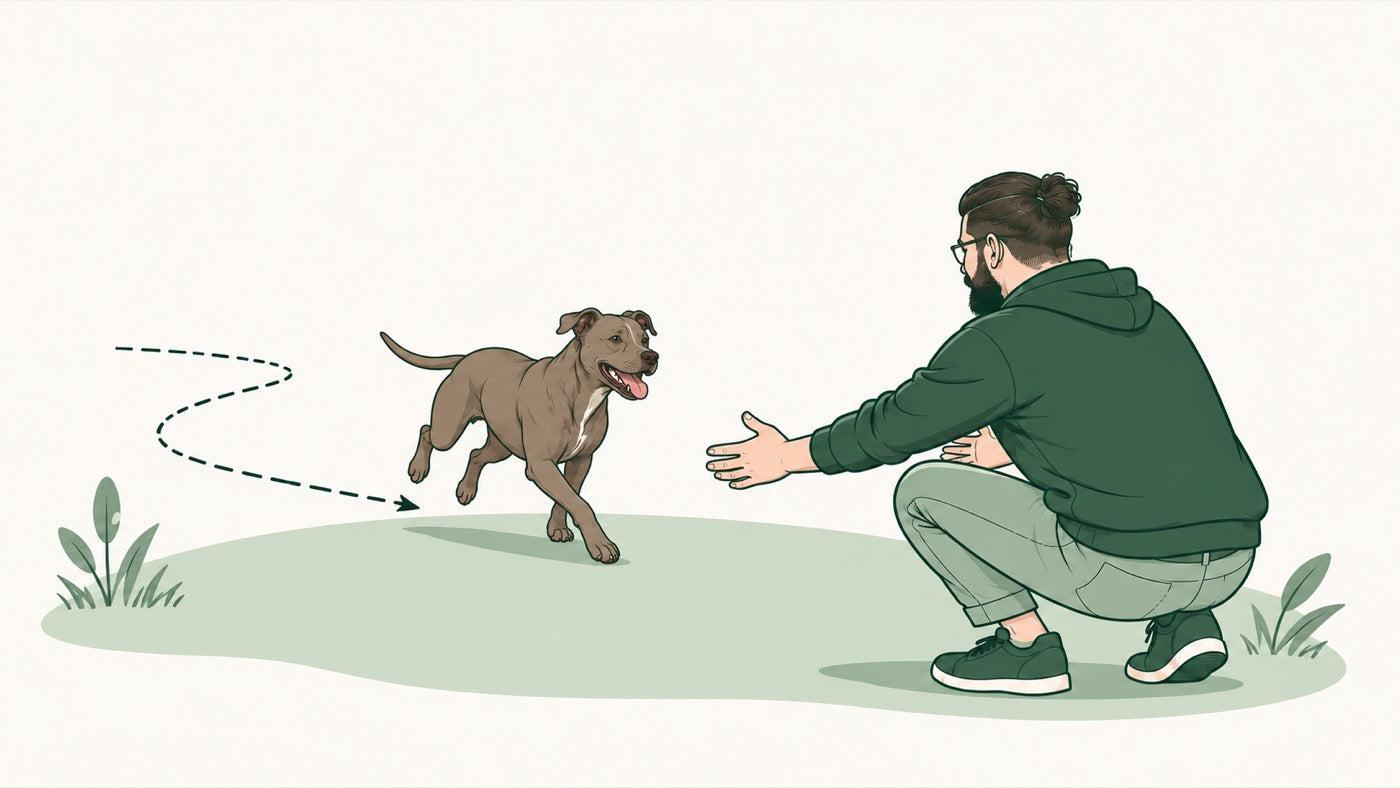
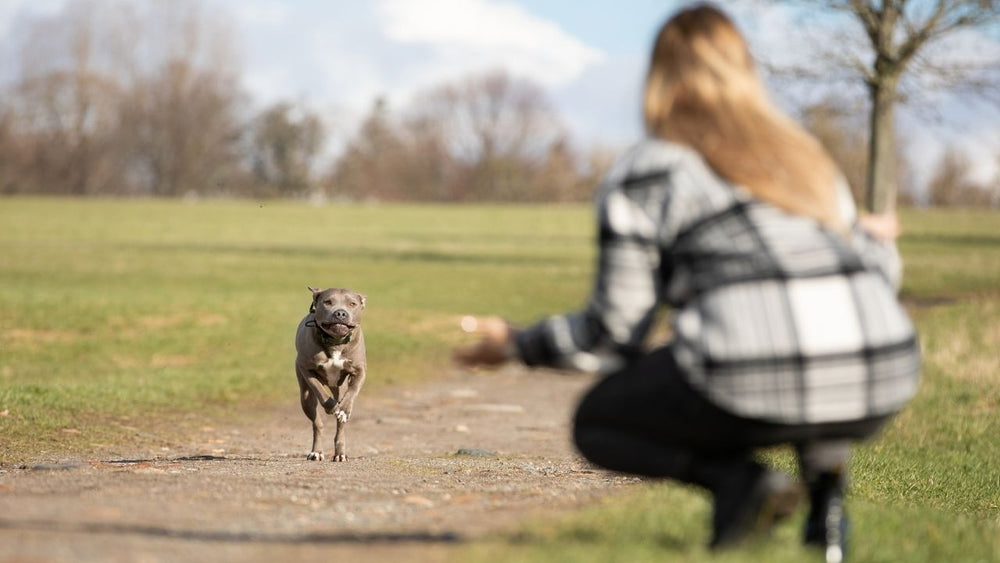
During training, as a dog owner, you must ensure that your expectations are realistic. If your dog is in the middle of romping with others, you won't be able to demand a recall from an untrained dog. Before you show your dog that you can call 3-4 times, you should show him that you won't call 3-4 times. There's a world of difference between "can" and "want". In such a moment, it's more advisable to go to your dog, leash him, and walk away. Can your dog not yet master a situation? Then guide him, show him your presence and your consistency. Your dog is clever and will quickly realize that if you call 3-4 times every time, he will only come the fourth time when the tone gets sharper. So why get angry and sharpen your tone when you can just leash the dog and walk away after the first call? Fair communication also means consistent communication with reliability. Whether in a nice sense (e.g., through reliability of reward) or in a goal-oriented sense (e.g., I enforce what I've said). How else will you create orientation if your dog doesn't perceive your leadership qualities? Your dog wants to orient himself to you as a person who has a plan, who can protect him, and on whom he can rely.
Primarily at the beginning of a learning phase, you should absolutely ensure that your dog always performs what you instruct him to do. So don't start a recall if you know it won't work. As a human, you create the framework for training success. This responsibility lies entirely with you! This means that, especially at the beginning, you should wait very consistently and patiently until the desired reaction actually occurs. Only then can your dog understand that, for example, "sit" always means "sit."
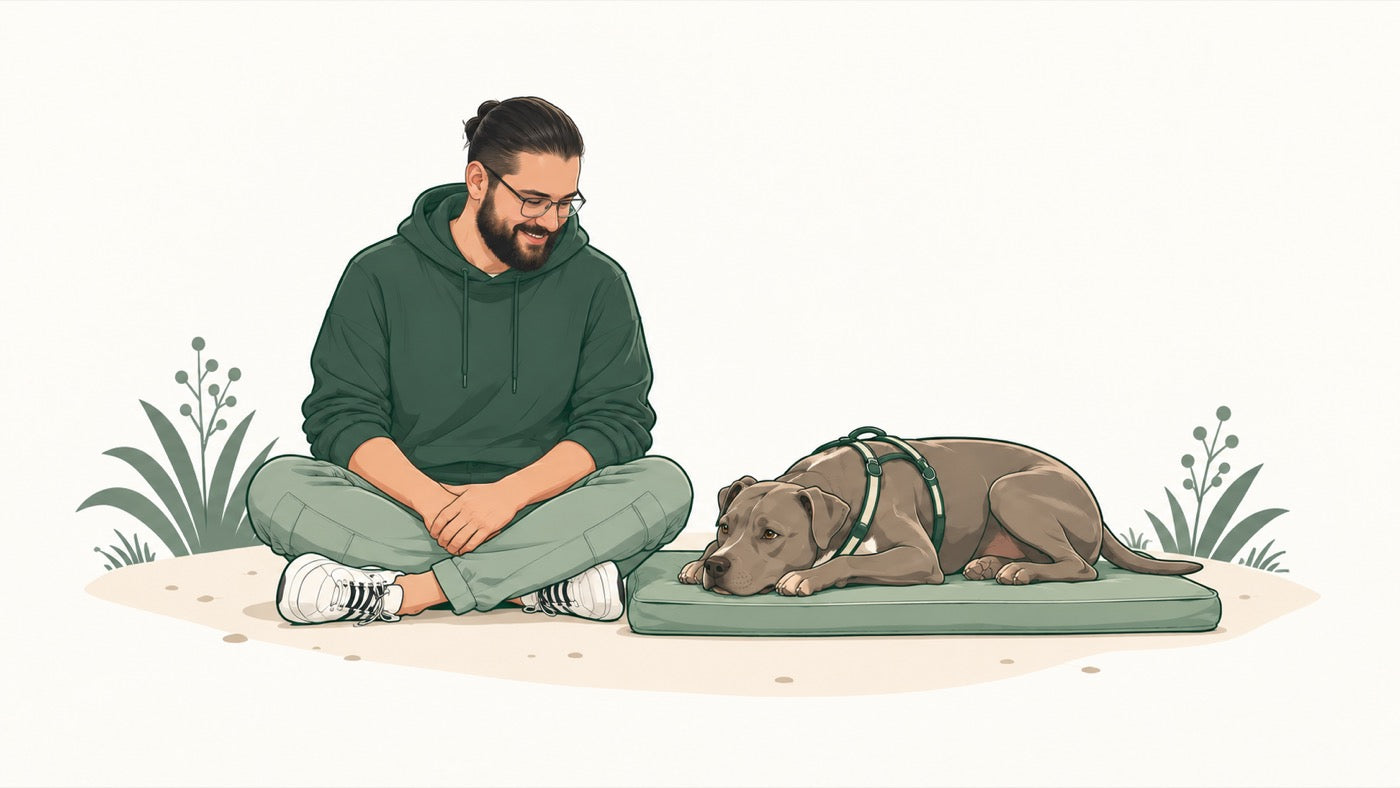
ℹ️ Attention! Always observe your dog and his receptiveness. You cannot constantly demand from an overtired dog, even though he is no longer receptive. It is better to plan many small training sessions instead of one long training session.
Visual or auditory signals: Which is better?
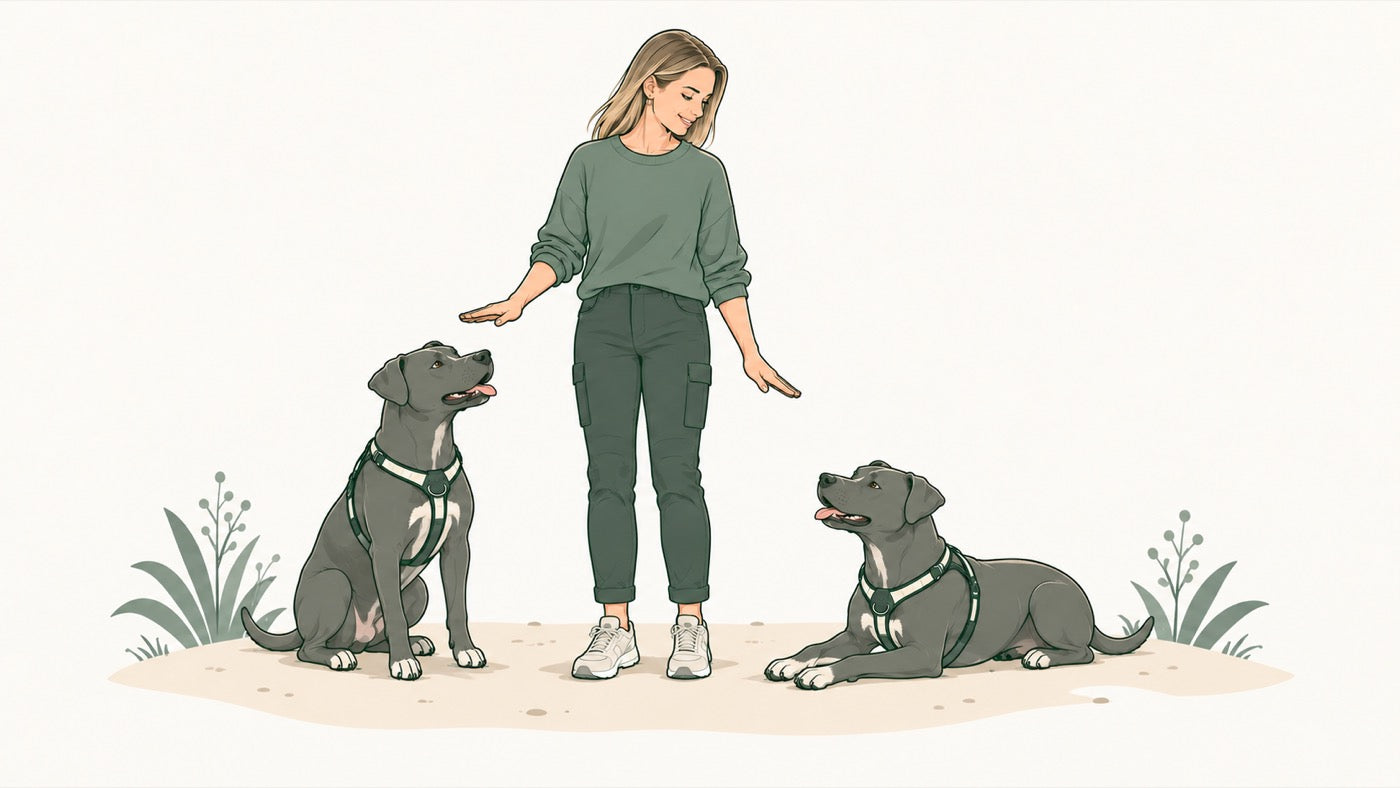
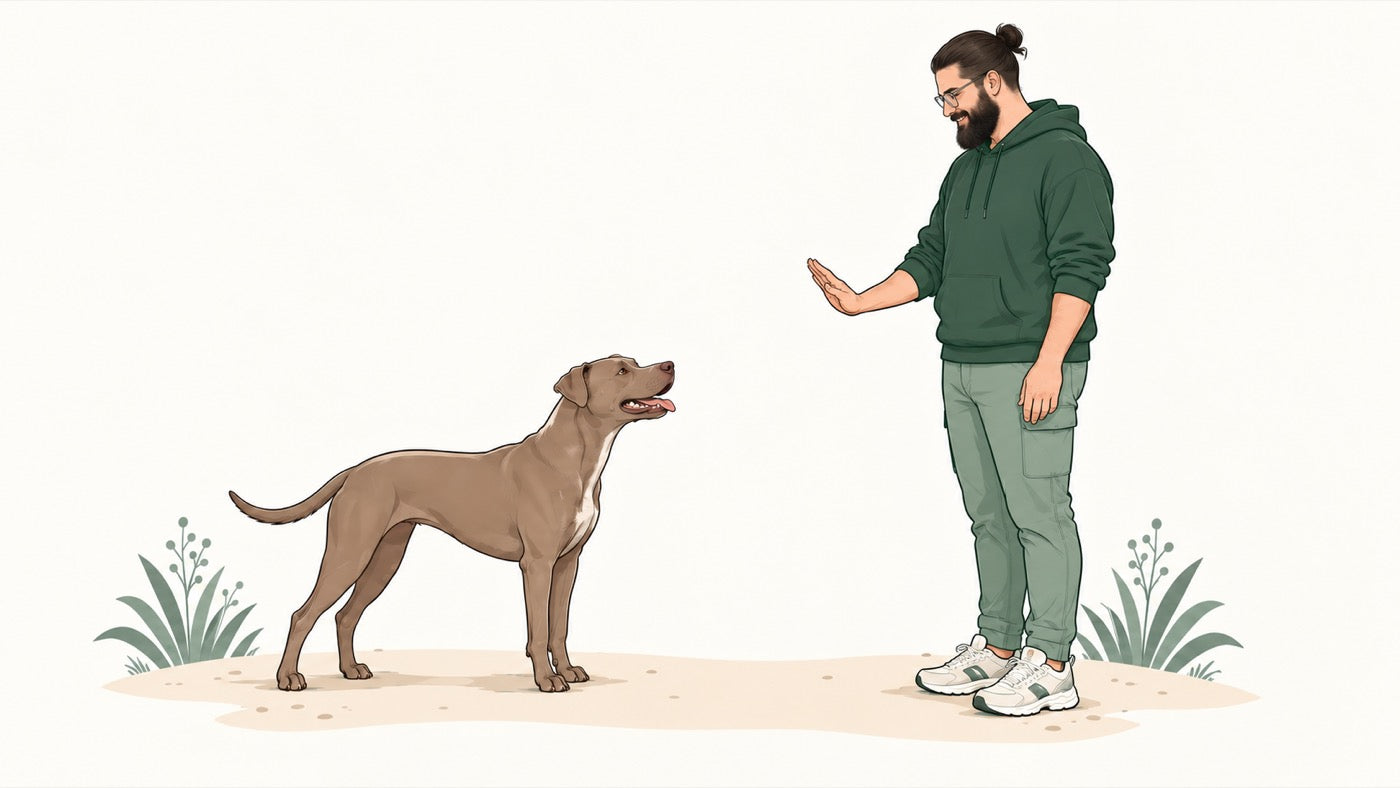
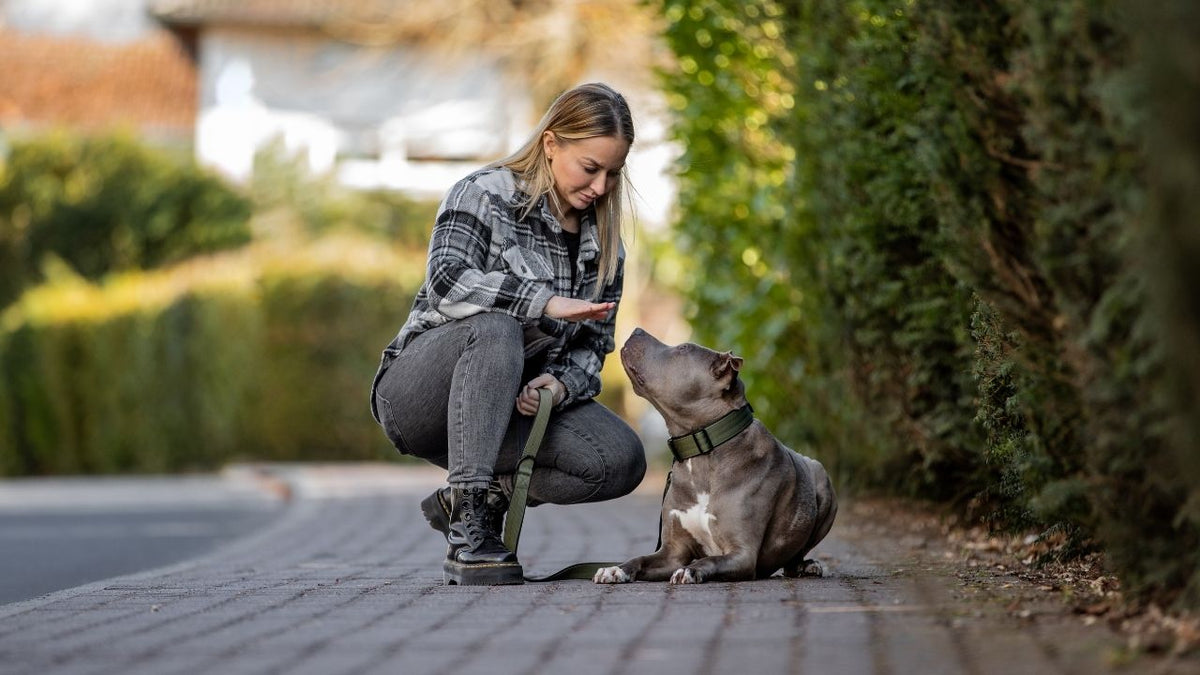
Scientific findings show that dogs primarily perceive body language and hand signals more intensely than spoken words. So, if we teach a dog "sit" with a hand signal and the signal word, the dog may not pay attention to the signal word "sit" at all, but only perceive the hand signal. Through signals, we achieve two things with the dog: first, the linking of a behavior to the signal word (when "sit" is given, the dog sits down). Second, we gain control over when a dog is allowed to show a behavior (when retrieving, the dog is not allowed to rush off wildly, but must wait for the signal word "fetch" or "bring it").
In general, the choice of signal words is entirely up to you; the only important thing is that words or visual cues are clearly distinguishable from each other. It makes no sense to use similar-sounding words.
ℹ️ We personally recommend always using words as signal words that you use less frequently in everyday language. For example, for a release to take something, we recommend "Take" instead of "Okay". We use the word "Okay" far too often in our everyday language, which is not particularly helpful for training. This could potentially weaken the signal word.
You can find the perfect equipment with us
Summary
Auditory and visual signals are essential for clear and reliable communication with your dog. They help guide your dog in a human-dominated world and enable you to act as a team in everyday life. Whether you prefer visual signals or auditory commands, the key is to train them consistently and in different environments. This teaches your dog not only the meaning of a signal but also that it is valid in every situation.
Remember that dogs primarily react to body language. Visual signals are often faster and clearer for them to understand. Nevertheless, you can use auditory signals as a supportive element to further refine your training. It is important to keep your expectations realistic and give your dog time to learn new behaviors.
Through consistent, fair, and clear communication, you build trust and strengthen the bond between you and your dog. The better you guide your dog, the safer and more relaxed they will be in everyday life with you.
It is important that you consider both your dog's individual abilities and set realistic expectations for the training. Every dog is different, and what works quickly for one may take a little longer for another – and that is perfectly fine. By setting clear goals and regularly reviewing your progress, you will see how your training continuously improves.
Always remember: good training is based on patience, trust, and a positive approach. If you know where you stand and where you want to go, you can offer your dog the security and clarity they need to develop. So, set your goals, stay consistent, and enjoy the progress you make together – step by step.
This video and training is part of the Grungehorsam Concept, a structured program for promoting obedience and the bond between human and dog. The concept is carefully designed didactically and methodologically to ensure that each exercise builds on the previous one, thus achieving maximum effectiveness. It is crucial that you carry out the training in the prescribed order to achieve the best possible results for your dog.