Hundeeis kann an warmen Tagen eine nette Beschäftigung sein, ersetzt aber weder Wasser noch Schatten noch vernünftiges Sommermanagement. Wir ordnen ein, wann solche Ideen sinnvoll sind und wo die Grenzen liegen.
Summer is here, temperatures are rising, and suddenly our dog is lying flat on the tiles, panting. In moments like these, many of us think about dog ice cream for the first time. A cold refreshment that tastes good, keeps them occupied, and brings a little cooling at the same time – it sounds like a perfect idea. But is it really? And how do we make dog ice cream in a way that is truly good for our dog?
We are Lui and Paulina, and together with our dogs Vito and Amalia, we have experienced summer heat up close many times. Vito is a sturdy guy; Amalia is more sensitive – and both respond very differently to high temperatures. But one thing we have learned is this: dog ice cream is a lovely summer idea, but it replaces neither water nor thoughtful heat management. It is a bonus, not a must.
Why dog ice cream is not a substitute for water
Let’s start with the most important point – and one that is often overlooked in social media posts. Dog ice cream is a nice activity and a small refreshment. But it is not a method for cooling a dog on hot days or meeting their fluid needs. That job belongs to clean, fresh water – ideally several bowls placed around the home, always in the shade, and changed regularly.
Dogs regulate their body temperature almost exclusively by panting. They do not sweat like we humans do – the few sweat glands on their paws play only a minor role in heat regulation. Behavioral researchers such as Beerda and colleagues have observed in several studies that dogs deliberately seek out cool surfaces, prefer shade, and reduce movement in hot weather. These so-called cooling behaviors are our dogs’ most important self-help strategy. A cold treat cannot replace these strategies; it can only complement them at most.
What really helps against heat
So before we get to the ice cream, here are the basics: shade, water, cool resting places, and walks only during the cooler times of day – ideally early in the morning or late in the evening. Asphalt can still be hot even when the air has already cooled down. If you are unsure, simply place your own palm on the ground for seven seconds. If it is too hot for us, it is certainly too hot for a dog’s paws.
Special care with brachycephalic dogs
Dog ice cream is a lovely snack here, but especially with these dogs, it’s worth thinking twice about whether a walk in the midday heat is really necessary.
Safe and unsafe ingredients—a clear look
When we make dog ice cream ourselves, we have full control over what goes into it. And that is exactly the key advantage over many store-bought products, which may contain sugar, sweeteners, or flavorings that are unnecessary or even dangerous for dogs.
Safe ingredients for dog ice cream
- Cottage cheese: Contains little lactose compared with other dairy products and is well tolerated by most dogs. Provides high-quality protein.
- Plain yogurt (in moderation): Pure, unsweetened yogurt contains less lactose than milk due to fermentation. Still, only use it in small amounts.
- Purèed banana: Adds natural sweetness and is high in calories—so use only in small amounts.
- Unseasoned dog broth: Homemade broth made from chicken or beef, without salt, without onion, without garlic.
- Berries: Blueberries, raspberries, or strawberries in small amounts provide antioxidants.
- Plain water: Sometimes the simplest ice treat is the best—just freeze water with a splash of broth.
Why dairy products only in moderation
An important point that is often overlooked: adult dogs are generally lactose intolerant—at least to varying degrees. The enzyme lactase, which breaks down milk sugar, is produced only in smaller amounts after puppyhood. In some dogs, this leads to diarrhea, stomach rumbling, or gas. Fermented products such as yogurt or cottage cheese are better tolerated, but they still should not be the main component.
These ingredients have NO place in dog ice cream
- Chocolate and cocoa: Theobromine is toxic to dogs.
- Grapes and raisins: Can trigger acute kidney failure.
- Artificial sweeteners in general: Aspartame, saccharin, and similar substances do not belong in dog ice cream.
- Sugar, honey in larger amounts, sweetened yogurts: They add nothing but empty calories.
- Salt, onion, garlic: Classic seasonings are off-limits – even in broth.
The shape makes the difference – why we choose the Bone
This brings us to something we have tested at home over many summers: how we offer the ice cream. The classic approach is that many people take a dish or bowl, pour the mixture in, freeze it, and then put it down for the dog. It works – but it is not ideal.
When eating from a bowl, a dog can either lick the ice cream off quickly (once it becomes too soft) or try to bite off larger pieces. With conventional plastic or ceramic bowls, neither is without risk: plastic can splinter if the dog bites down with pressure, and ceramic can break. Ice cream also melts quickly in a shallow bowl and turns into a puddle.
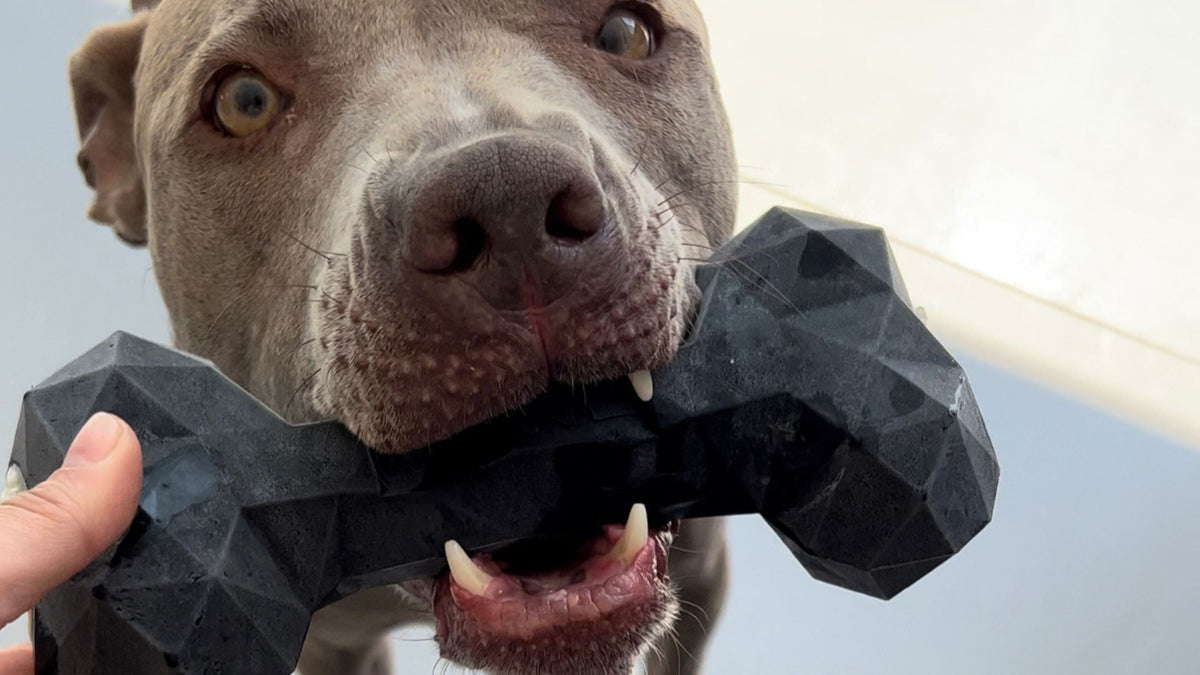
That is why we have been using our Vitomalia Bone for quite some time – originally developed as a chew and fillable bone. Its shape offers a few specific advantages that become especially useful in summer:
- Stability: The Bone is made from a material that does not splinter when the dog works on it.
- Slower enjoyment: The recesses hold the ice cream in place for longer, so the dog has to actively lick it out – this slows down intake.
- Enrichment value: Licking from a Bone is not just cooling down; it is also a small cognitive task.
- Patience training: Instead of quickly inhaling it, the dog learns to work it out bit by bit.
We want to be completely honest here: this is not about every dog needing a Bone in order to enjoy ice cream. There are other fillable toys on the market, and if you do not have one, you can also use a sufficiently large, sturdy bowl. What matters to us is explaining why the shape plays a role at all.
Three simple recipes for summer
1. The classic ice cream: cottage cheese and banana
Purée half a ripe banana with two tablespoons of cottage cheese. Fill into the Bone or a silicone mold and freeze for at least four hours. This version is mild, slightly sweet, and is well accepted by most dogs.
2. Broth ice cream: for dogs who do not like drinking
Cook unseasoned chicken broth yourself (chicken carcass, water, simmer for one and a half hours, leave to cool, pour through a sieve, skim off the fat). Fill into the Bone or ice cube molds and freeze.
3. The berry ice cream: light and fresh
Purée a handful of blueberries with three tablespoons of plain yogurt and a splash of water. Fill, freeze, done. Caution: The first time, offer only a small portion to see whether your dog tolerates the yogurt.
The portion rule: WSAVA-compliant
Some dogs like it, others don’t – and that’s okay
One final, important point that matters to us: dog ice cream is not a must. Some dogs think cold snacks are wonderful and enthusiastically accept every portion. But there are also dogs who try it briefly, find the ice cream strange, and turn to other things.
Both are completely fine. We know this from our own dogs: Vito is pragmatic and happily accepts any kind of snack, while Amalia is more selective and decides depending on how she feels that day. If your dog doesn’t accept the ice cream, that is not a problem. There are many other ways to do something good for them on hot days – a cool resting spot, a gentle cuddle on the tiles, a slow walk in the woods, or a sniffing task in the shade.
Our Vitomalia conclusion
Dog ice cream is a lovely summer idea – but nothing more and nothing less. It is an activity, a little refreshment, and a nice bonus on hot days. What it is not: a substitute for water, a substitute for shade, or a substitute for sensible heat management.
When we make dog ice cream ourselves, we have full control. We choose simple, dog-friendly ingredients, leave out all sweeteners and especially xylitol, and adjust the portion size to the daily ration. We offer the ice cream in a way that lets the dog enjoy it slowly – from a sturdy container or a fillable toy like our Vitomalia Bone, which was originally developed so dogs can actively work for their food and settle down in the process.
And most importantly: We respect what our dog likes and what they don’t. Some love ice cream, others find it strange. Both are perfectly fine. What matters is that we stay attentive on hot days, read our dog’s behavior, and give them what they need in that moment – sometimes ice cream, sometimes simply a cool spot with us beside them.