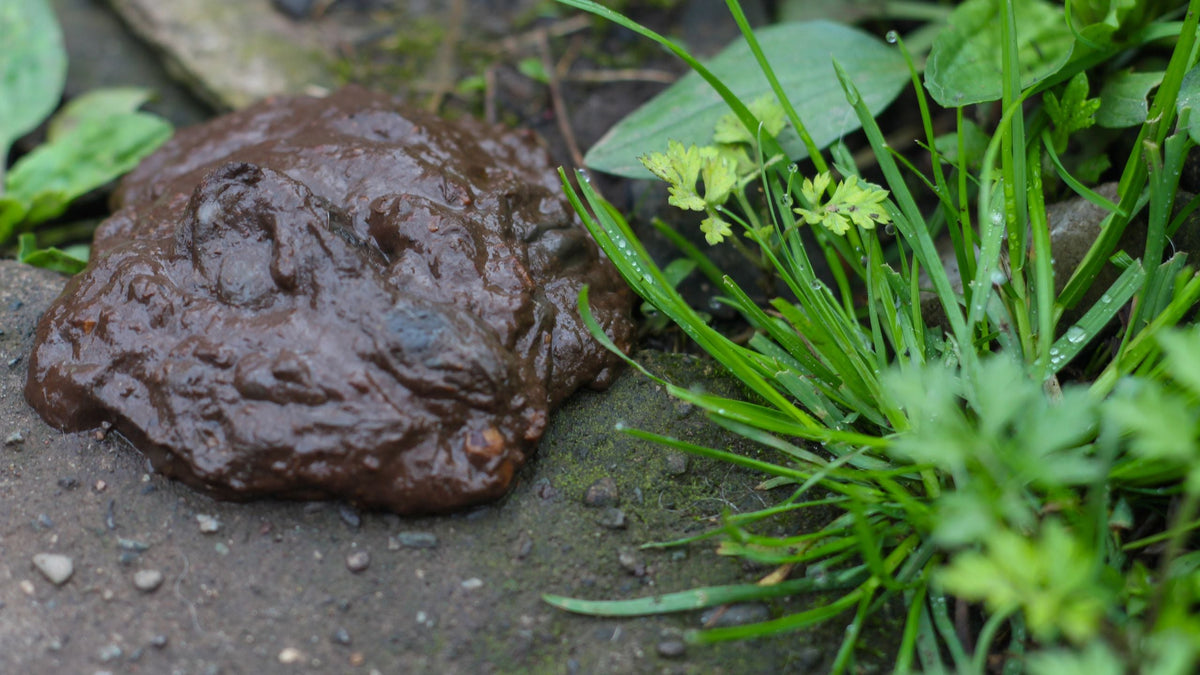
Durchfall ist ein Symptom, keine Diagnose. Wir erklären, was dahinterstecken kann, wann Beobachten sinnvoll ist und ab welchem Punkt Hausmittel die notwendige Abklärung nur noch verzögern.
Diarrhea in dogs is one of the most common reasons why dog owners suddenly wonder whether they can take action themselves or already need a veterinarian. We understand that well — especially because it often seems harmless and, in many cases, actually is harmless. But that is exactly where the problem lies: diarrhea is a symptom, not a diagnosis. The same soft stool can have very different causes, ranging from mild dietary irritation to serious internal medical conditions.
For us, this means: we do not want to simply reassure dog owners, but to empower them. In this article, we explain what may be behind diarrhea, which home remedies are useful and which are more likely to be pseudomedicine, and above all — how we can tell that waiting is no longer the right approach. We base this on the current state of veterinary medicine, including the WSAVA Gastrointestinal Guidelines and the American College of Veterinary Internal Medicine (ACVIM) consensus on chronic enteropathy in dogs.
What can be behind diarrhea
The possible causes are varied — and that is what makes the symptom so diagnostically challenging. According to the Merck Veterinary Manual and the WSAVA consensus, the most common triggers include:
- Dietary mistakes: spoiled food, garbage, abrupt food changes, leftovers that are too fatty — the most common cause of acute diarrhea.
- Parasites: giardia, worms (roundworms, hookworms, whipworms), particularly relevant in puppies.
- Infections: viruses (parvo, corona, distemper), bacteria (salmonella, Campylobacter, clostridia), less commonly fungi.
- Food intolerance or allergy: often chronic, frequently combined with skin symptoms.
- Stress: veterinary visits, moving home, new household members, separation situations — a real trigger in sensitive dogs.
- Internal diseases: pancreatitis, liver disease, kidney insufficiency, exocrine pancreatic insufficiency (EPI).
- Chronic inflammatory bowel diseases (IBD/CIE): immune-mediated processes that, according to the ACVIM consensus, must be investigated systematically.
- Tumors: rare, but important in the differential diagnosis for older dogs with chronic diarrhea.
- Medication side effects: antibiotics, NSAIDs, and some deworming treatments can trigger diarrhea.
What this list shows: “My dog has diarrhea” is diagnostically about as specific as “my car isn’t running properly.” Only the context — duration, accompanying symptoms, age, pre-existing conditions — turns the symptom into a meaningful assessment.
Acute versus chronic — an important distinction
Veterinary medicine clearly distinguishes between acute and chronic diarrhea. Acute means lasting less than two to three weeks. Chronic means lasting more than three weeks, or recurring in episodes. This distinction is not academic; it fundamentally changes the diagnostic approach.
In acute diarrhea without warning signs, short-term observation with a bland diet can be reasonable. In chronic diarrhea, the ACVIM consensus on chronic enteropathy is clear: a systematic workup is required — including fecal testing, bloodwork, imaging where appropriate, and in some cases endoscopy with biopsy. Home remedies are no longer a sensible strategy here.
Home remedies — what really helps, what is a myth
Home remedies are popular because they allow quick action. Some of them have a real effect; others are more tradition than treatment. We’ll go through the most common ones.
Bland diet — yes, but done properly
Cooked chicken with rice or potato is the classic bland diet approach and is indeed accepted in veterinary medicine for uncomplicated acute diarrhea without warning signs. The idea behind it is not healing, but relief: easily digestible, low-fat food reduces the burden on the gastrointestinal tract while the mucosa regenerates.
The right dosage matters — small portions, several times a day, over two to three days. Feeding a bland diet for longer is not advisable because it is nutritionally unbalanced. If there is no improvement after 24 to 48 hours, that is a sign that the cause cannot be resolved through dietary relief alone.
Probiotics — cautiously optimistic
This is where it becomes scientifically interesting. Research by Jan Suchodolski (Texas A&M Gastrointestinal Laboratory) and Stefan Schmitz has significantly expanded our understanding of the canine microbiome in recent years. Several studies show that the microbiome is measurably altered in acute and chronic diarrhea — the so-called dysbiosis pattern can now be quantified using the Dysbiosis Index.
What the data on probiotics show: Certain strains (such as Enterococcus faecium SF68 or combination products with Bifidobacterium and Lactobacillus) can shorten the duration of acute diarrhea — this has been shown in several randomized studies. For chronic enteropathies, the evidence is less consistent: promising, but not yet conclusive.
Our assessment: probiotics are not a cure-all, but they are an option with scientific plausibility for acute, uncomplicated diarrhea. It is important to use a veterinary-tested product, not a human yogurt product — that has a completely different strain composition.
Activated charcoal and “healing clay” — useful only to a limited extent
Activated charcoal has a real pharmacological effect — it binds certain toxins in the intestine. It can therefore be useful in specific situations, such as after ingestion of certain toxic substances, and in those cases it belongs in veterinary hands. As a blanket remedy for every case of diarrhea, it is not supported by scientific evidence. Healing clay (bentonite) follows a similar logic, but has not been systematically studied in veterinary medicine. Neither replaces diagnostics.
What we should not give
An important point: No self-medication with Imodium (loperamide) or other human medicines. In dogs, loperamide can slow intestinal transit so much that toxins or pathogens remain in the body for longer — in many cases, this is counterproductive. In certain breeds (Collies, Australian Shepherds with the MDR1 mutation), it can also cause severe neurological side effects. Human painkillers (ibuprofen, paracetamol) are also toxic to dogs and have no place in the treatment of diarrhea.
Warning signs — when it is no longer about waiting
This is the most important section of this article. There are clear signs where we should no longer observe, but act. They come from the WSAVA consensus and standard veterinary practice:
- Blood in the stool — visibly red or as dark, tar-like stool (melena, an indication of digested blood from the upper digestive tract).
- Vomiting in addition to diarrhea — especially if both persist, rapid dehydration can become a risk.
- Lethargy, apathy, marked fatigue — the dog seems “not like himself.”
- Abdominal pain — tense abdomen, hunched posture, sensitivity to touch.
- Fever — above 39.5 °C rectally.
- Persistent diarrhea for more than 24 hours in adult dogs without improvement.
- Puppies or senior dogs — their reserves are lower, and dehydration develops more quickly. We do not wait and see.
- Dogs with pre-existing conditions — diabetes, kidney insufficiency, heart disease, immunosuppressed animals.
- Suspected ingestion of poison or a foreign object.
- Reduced or absent water intake with simultaneous fluid loss.
For us, this is not a matter of being overly cautious. It is the understanding that diarrhea is harmless in most cases — but that the exceptions are serious. And that dog owners who know these warning signs can protect their dog much better.
What dog owners can do in concrete terms
If there are no warning signs, the dog is adult, otherwise healthy, and stable in its general condition, a structured observation period can be appropriate. We recommend:
- Offer water at all times — dehydration is the main acute risk.
- Short food break of 6 to 12 hours (not for puppies or small breeds), followed by a bland diet in small portions.
- Document the course: frequency, consistency, accompanying symptoms, behavior — this information also helps the veterinarian assess the situation later.
- Veterinary probiotic can be used optionally for uncomplicated acute diarrhea.
- No self-medication with human preparations.
- Veterinary assessment, if there is no improvement after 24 hours or the condition worsens — immediately for puppies, senior dogs, and dogs with pre-existing conditions.
With our two — Vito and Amalia — we handle it in exactly the same way. We do not wait two days to see whether “it goes away again,” but respond early, document carefully, and decide based on the observed course when the veterinarian needs to be involved. That is not overly anxious; it is structured.
When diagnostics provide more value than treatment attempts
In cases of chronic diarrhea or recurring episodes, the ACVIM consensus is clear: trial therapies without diagnostics often only mean that the actual cause remains untreated for longer. A systematic assessment — fecal testing for parasites and pathogens, blood work, and, where appropriate, imaging and endoscopy — is not a luxury here, but standard practice. The question “What can I give?” then becomes the wrong question. The right one is: “What is actually behind it?”
Our Vitomalia conclusion
Diarrhea in dogs is a symptom with many possible causes — from harmless to serious. That is exactly why it does not need a formula, but an informed assessment. A bland diet and a veterinary probiotic can provide useful support in uncomplicated acute diarrhea. Activated charcoal and healing clay have less evidence for broad use than their popularity suggests. And human medicines such as loperamide do not belong in self-medication.
The most important point remains: know the warning signs — blood, tarry stool, vomiting, lethargy, pain, puppy or senior age, duration over 24 hours — and do not wait if they occur. Chronic diarrhea (lasting more than three weeks) calls for a systematic assessment, not a routine of home remedies.
For us, this means taking dog owners seriously not by reassuring them, but by enabling them to act. We respond early with our dogs, document carefully, and make conscious decisions about when observation is appropriate and when diagnostics are necessary. This is where responsible practice begins — not with the question “What can I give quickly?”, but with “How stable is the overall picture, and when is medical help needed?”.