Nicht jeder Hund friert gleich, und nicht jeder Mantel hilft. Wir erklären, wann Schutzkleidung funktional sinnvoll ist und woran wir echten Bedarf statt bloßer Gewohnheit erkennen.
As soon as the first cold days arrive, the question comes up again in almost every dog group: Does my dog need a coat — or is that already humanizing them? We understand the reflex behind the question. On one side are dog owners who lovingly wrap up their dogs. On the other are voices saying: “A dog isn’t a handbag.”
For us, the answer is neither one extreme nor the other. A Dog Coat is neither a fashion question nor exaggerated humanization — provided it is used functionally. It is not about appearance, but about thermoregulation, coat type, age, health, and weather. In this article, we look at what science says about cold sensitivity in dogs, which dogs truly benefit from a coat, and when it is unnecessary. And we share how we handle this with Vito and Amalia.
How dogs regulate heat — and where their limits are
Dogs are mammals with a stable core body temperature (around 38.3–39.2 °C), but their ability to retain heat is not the same in every dog. Thermoregulation depends on several factors: coat type, body fat percentage, body size, age, health status, and exercise intensity.
A widely cited paper by Tufts University (Tufts Animal Care and Condition Scale, Patronek 1997) and veterinary statements such as those from the American Veterinary Medical Association (AVMA) on cold exposure state that dogs respond to cold individually, and that there are clear risk groups whose body temperature drops more quickly under unfavorable conditions. The Merck Veterinary Manual also describes hypothermia in dogs as a realistic risk, especially in wet, cold weather, in small or lean dogs, and in old or sick animals.
What happens during cold stress?
If a dog cools down for an extended period, the body first responds with vasoconstriction (narrowing of the blood vessels in the periphery), then with muscle shivering, and later with a measurable increase in stress hormones such as cortisol. Studies on dogs in cool environments (e.g. Beerda et al., Applied Animal Behaviour Science, 1997 ff., as well as later work on stress markers) show that sustained exposure to cold triggers measurable physiological stress responses — even when the dog is not visibly shivering.
This is an important point for us: shivering is a late sign. If you wait until your dog is shivering, a lot of time has already passed in which the body has had to work against the cold.
Which dogs benefit from a coat
This is where it becomes specific. Clear risk groups can be derived from the scientific and veterinary literature for which a coat is functionally appropriate:
Short-haired dogs with little undercoat
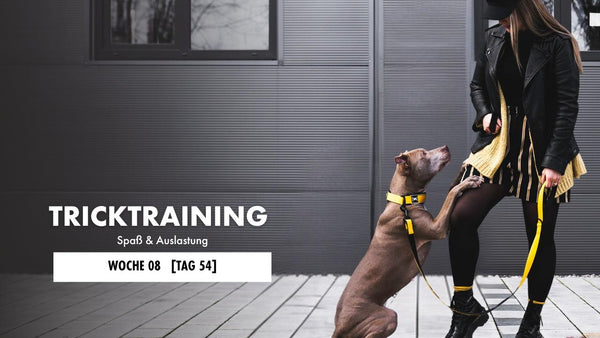
American Staffordshire Terrier, American Pit Bull Terrier, Boxers, Dobermans, Great Danes, Whippets, Greyhounds, Galgos, Pinschers, Vizslas, short-haired Pointers — none of them have a double coat. The hair layer is thin, and an insulating undercoat is largely absent. In addition, many of these breeds have a lean build with little body fat. Heat is lost faster than it can be produced again.
Poodles and poodle-like hybrids that have been clipped short also fall into this category — clipping completely removes the natural insulation.
Puppies
Puppies have immature thermoregulation. The ability to reliably maintain core body temperature only develops fully during the first weeks of life. In small or short-haired puppies, sensitivity often remains elevated for longer even after that.
Senior dogs
Older dogs often have less muscle mass, a reduced metabolic rate, and frequently pre-existing conditions such as arthritis. Cold has been shown to worsen arthritic symptoms — a review on canine osteoarthritis (Anderson et al., Frontiers in Veterinary Science, 2020) classifies cold and damp weather as known factors that intensify pain and stiffness symptoms. A well-fitting coat keeps the torso warm and, in this way, indirectly reduces strain on the joints.
Sick and recovering dogs
After surgery, with chronic illnesses, low body weight, or a weakened immune system, it is harder for the body to retain heat. Veterinary recommendations regularly support additional thermal protection in these cases.
Brachycephalic breeds
One point that is often overlooked: dogs with shortened muzzles (bulldogs, pugs, boxers to a milder degree) have difficulty effectively pre-warming cold air before it reaches the lungs because of their anatomical airway structure. Veterinary sources point out that cold air can additionally irritate the already stressed airways of brachycephalic dogs. A coat does not replace this function, but it helps stabilize the body as a whole, so less energy has to go into heat production.
When a coat is unnecessary
It is just as important to be honest about the other side. There are dogs for whom a coat provides no measurable added value — and in some cases may even get in the way.
Double-coated dogs
Siberian Huskies, Alaskan Malamutes, Bernese Mountain Dogs, German Shepherds, Spitz-type dogs, Samoyeds, Newfoundlands, Saint Bernards, and many herding dog breeds have a dense double coat with guard hair and insulating undercoat. This structure works like a built-in functional suit. An additional coat compresses the undercoat, cancels out the natural air cushion, and can paradoxically worsen thermoregulation. In dry cold, these dogs are almost always better off without a coat.
Healthy, well-muscled adult dogs in motion
This also applies to short-haired dogs: as long as the dog is moving at a brisk pace, muscle activity produces heat. On a brisk 30-minute walk in dry, cold conditions at 0 °C, a muscular, healthy dog generally will not feel cold. It becomes critical when the dog stands, sits, waits — or when the activity ends and cooling begins.
Dry, cold weather without long periods of standing still
Dry cold is much easier for most dogs to compensate for than wet cold. Water conducts heat away around 25 times faster than air — that is physics, and it matters for wet fur. A healthy dog can often tolerate dry cold for a surprisingly long time. Once moisture and wind are added, the calculation changes.
Rules of thumb we use in everyday life
We do not like rigid numbers, because every dog is individual. Still, orientation values can help:
- Short-haired dogs: Below around +5 °C — especially with wind or moisture — it is worth considering a coat.
- Double-coated dogs: Usually only relevant below around -5 °C, and only when standing still for longer periods, in old age, or in illness.
- Puppies, senior dogs, sick dogs: Set the threshold earlier on an individual basis — it is better to provide protection a little too soon than too late.
- Wet and cold: A coat makes sense much earlier than in dry cold at the same temperature.
These values are not natural laws, but orientation. What matters remains the dog in front of us: how they behave, how quickly they tire, and how well they recover.
Signs that your dog is cold
Shivering is only the clearest, but latest, signal. We also look for:
- Arched back, tucked tail, tense posture
- Stopping, lifting paws, visible discomfort
- Reduced joy in movement, noticeably slower pace
- The dog wants to go home earlier or actively seeks sheltered spots
- Stiffness after the walk, taking longer to warm up at home
What a good coat must provide functionally
A coat is only a useful tool if it does what it is meant to do — without creating new problems. From a veterinary and biomechanical perspective, these points are central:
Waterproof or water-repellent
In wet, cold weather, dry fur is half the battle. A coat that lets moisture through is, when in doubt, worse than none at all because it adds insulation to the fur and keeps cold moisture against the body.
Breathable
When moving, the dog produces heat. If this heat cannot escape, heat and moisture build up under the coat — the opposite of what we want.
Precise fit, without pressure on the shoulder joint
The most common construction flaw: coats that sit too tightly around the neck or over the shoulder blades. This interferes with the mechanics of the forelimbs and, when worn for long periods, can restrict movement. A good coat allows the shoulder joint to rotate freely.
Freedom of movement
The dog must be able to walk, stretch, shake, defecate, and urinate without the coat slipping or restricting movement. Belly straps and back length also play a role here.
Easy to put on and take off
What feels complicated will not be used consistently in everyday life. Clear fasteners that the dog accepts are more important in the long term than any design detail.
Vito and Amalia: How we handle it with our dogs
Vito and Amalia are both short-haired dogs from the AmStaff/APBT line. Short, dense topcoat, no significant undercoat, lean to muscular build. This puts them in the group where a coat — depending on the weather — can be a genuinely useful tool.
How we decide in practical terms: In wet-cold weather (rain, wet snow, clearly below +5 °C), we put a functional coat on both of them. Not out of excessive caution, but because we see that otherwise both of them noticeably lose energy faster and want to go home. In dry-cold weather below around -5 °C, too — especially when longer periods of standing still or calm sections are planned.
In dry cold between 0 and -5 °C and with brisk movement, we do without the coat. Both produce enough warmth while moving, the coat is dry, and the wind does not cut directly to the skin. In this range, a coat would be unnecessary — and that is exactly what we mean by functional rather than routine.
This logic applies to our dogs. With a double-coated dog, the decision would be different. With a senior dog with osteoarthritis, too. That is the point: the coat question is always an individual decision that takes coat type, weather, age, and health into account.
Our Vitomalia conclusion
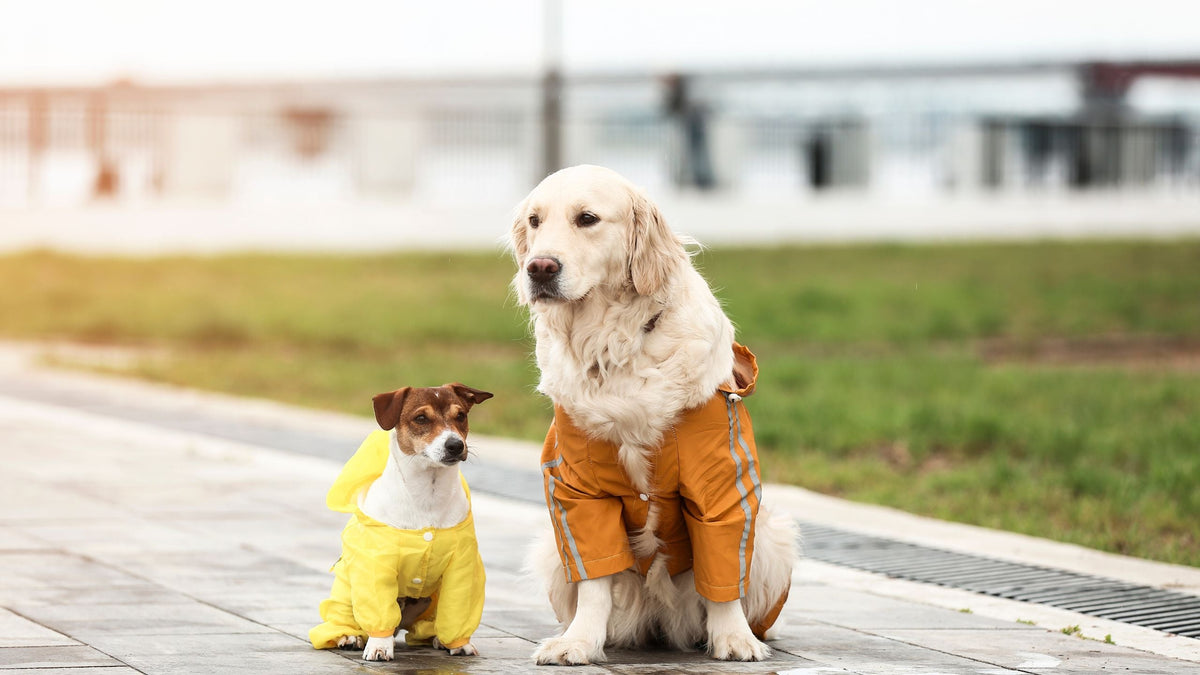
A Dog Coat is not a question of fashion and not excessive humanization. It is a piece of equipment — like a Long Leash or a well-fitting chest harness strap. Used functionally, it has a clear purpose for the right dogs in the right weather conditions. Used decoratively, it is an accessory that adds nothing and, in the worst case, restricts freedom of movement.
We do not make the decision based on trends or ideology, but on three questions: What coat type? What weather? What state of health? If the answer points to a coat, we put one on. If not, we do not. Both are okay. What we do not want: dogs being wrapped up out of habit even though they do not need it — or dogs being left to freeze on principle because their dog owners reject clothing on dogs.
Look at your dog, observe them in the weather they actually experience, and make your decision from that observation. For us, that is thoughtful dog ownership — when it comes to coats, just as in every other area.